


To choose a face cream, start with your skin type, then pick the texture that suits it, and only then check the ingredient list. Oily skin does best with a light gel-cream or fluid. Dry skin wants a richer cream. Sensitive skin needs a short, fragrance-free formula. Combination skin usually gets on with a light cream everywhere and a little extra where it feels tight.
Price, packaging and the promise on the front of the jar tell you far less than those three checks. This guide shows you how to do each one, including a simple test to find your skin type at home.
Key takeaways
- Skin type first. How your skin behaves a few hours after cleansing, with nothing on it, tells you more than any quiz.
- Texture second. Light gels and fluids for oily skin, richer creams for dry skin.
- Ingredients third. The first five names on the list make up most of the jar.
- Dry and dehydrated are different. Oily skin can feel tight too, and it still wants a light texture.
- Give a new cream about four weeks before deciding whether it suits you.
What is a face cream? A face cream is an emulsion of water and oils made for facial skin. It keeps the skin surface comfortable in three ways: it draws in water, it softens, and it slows the loss of moisture. Face creams differ mainly in texture and in how they balance those three jobs, which is why the right one depends on your skin type.
How do you know your skin type?
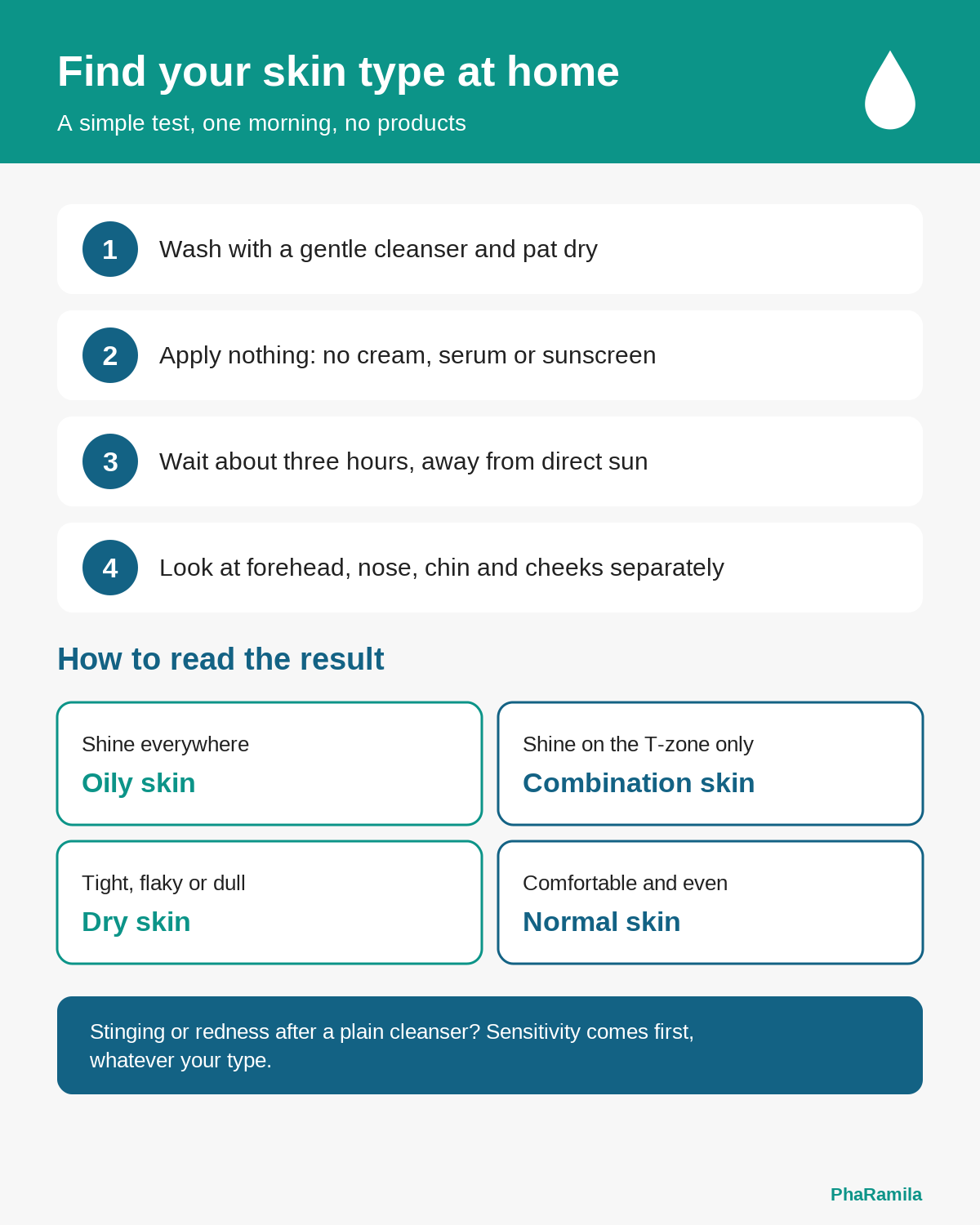
Your skin type is how your skin behaves a few hours after cleansing, with nothing on it. A simple test at home, done in daylight, is the most reliable way to find out. It costs nothing and takes one morning.
- Wash your face with a gentle face cleanser and pat it dry.
- Apply nothing: no cream, no serum, no sunscreen.
- Wait about three hours indoors, away from direct sun.
- Look at your forehead, nose, chin and cheeks separately, not at your face as a whole.
Shine across the whole face means oily skin. Shine on the forehead, nose and chin (the T-zone), with cheeks that feel normal or tight, means combination skin. Tightness, flaking or a dull, papery look everywhere means dry skin. Skin that feels comfortable and even, neither shiny nor tight, is normal.
Sensitivity works differently. It describes how easily your skin reacts, with stinging, redness or warmth after a new product, rather than how much oil it makes. You can have sensitive skin that is also oily, or also dry. If a plain cleanser leaves your face stinging, make sensitivity your first filter when you shop.
Your skin type is not fixed for life. It shifts with the seasons, with age and with where you live, so repeat the test when your current cream stops feeling right.
Dry or dehydrated skin: the difference that changes your choice
Dry skin makes little oil; it is a skin type. Dehydrated skin lacks water; it is a temporary state, and oily or combination skin can be dehydrated too. Both feel tight and can look dull, so they are easy to confuse.
The clue is shine. If your skin feels tight after cleansing but still turns shiny by midday, it is probably dehydrated rather than dry. The two call for different creams. Dehydrated skin wants water-binding ingredients such as glycerin or hyaluronic acid in a light texture. Dry skin wants those plus richer, oil-based ingredients. Putting a heavy cream on oily, dehydrated skin is one of the most common reasons a new cream feels wrong.
Which face cream texture suits your skin type?
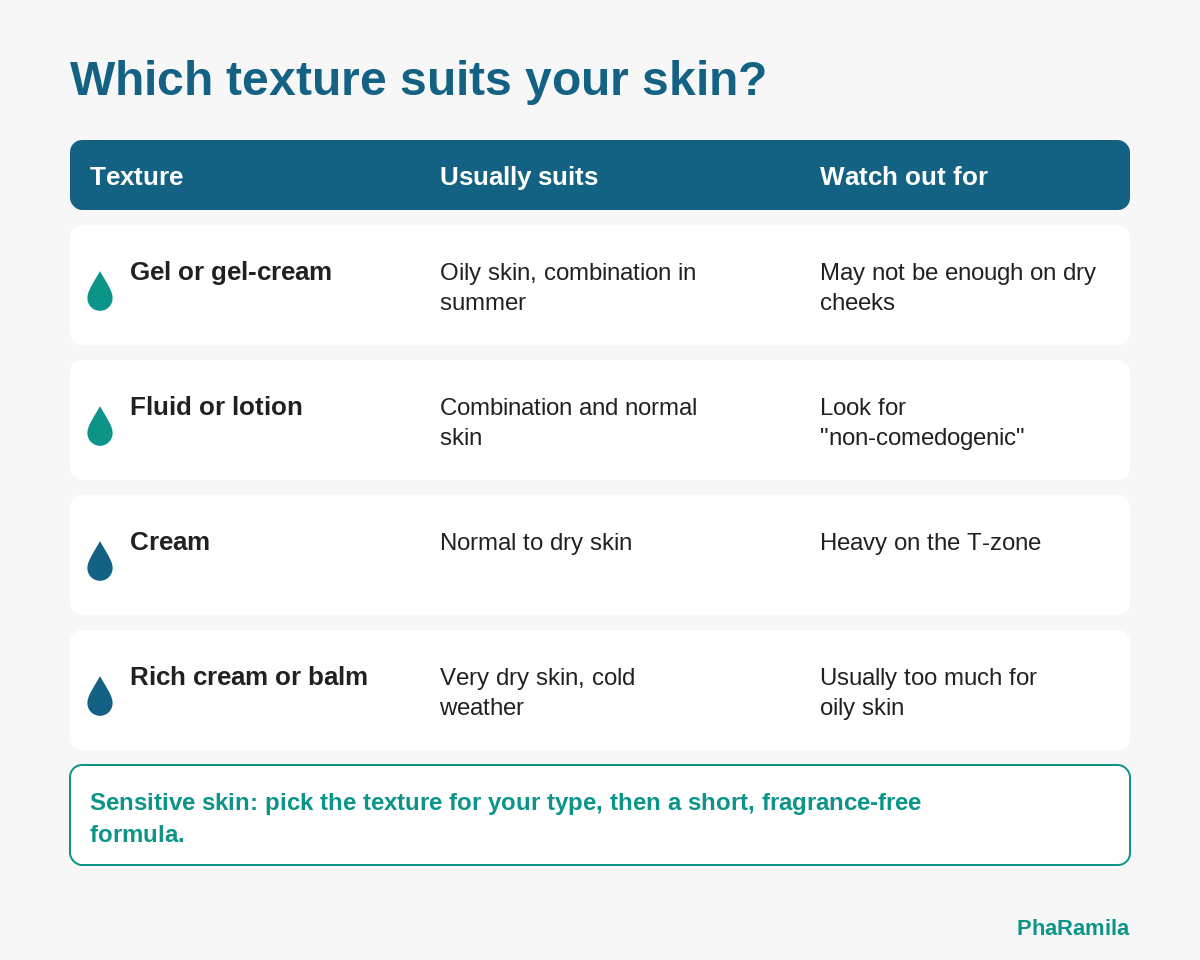
Match the texture to your skin type before you look at anything else. Texture decides how a cream feels at midday, and a cream that feels wrong does not get used. The table below is the quickest way to narrow your choice.
| Texture | How it feels | Usually suits | Watch out for |
|---|---|---|---|
| Gel or gel-cream | Watery, absorbs in seconds, no film | Oily skin, combination skin in summer | May not feel like enough on dry cheeks |
| Fluid or lotion | Light, slightly milky, thin film | Combination and normal skin, oily skin in winter | Check the label for “non-comedogenic” if you get blocked pores |
| Cream | Soft, visible layer for a minute or two | Normal to dry skin | Can feel heavy on the T-zone |
| Rich cream or balm | Dense, cushiony, stays on the surface | Very dry skin, cold and windy weather | Usually too much for oily or combination skin |
The right face cream for each skin type
Once you know your skin type, the choice narrows quickly. Here is what to look for in each case, in terms of texture, key ingredients and what to avoid.
Oily skin
Oily skin still needs a face cream, just a light one. Skipping moisturiser often leaves the skin feeling tight after cleansing and shinier later in the day. Look for a gel-cream or a fluid labelled oil-free or non-comedogenic, which means it is formulated to be less likely to block pores. Glycerin and hyaluronic acid add water without weight, and niacinamide is often chosen for oily skin because it helps the skin look more even and less shiny.
Combination skin
Combination skin gets on best with one light fluid applied all over, plus a thin second layer on the areas that feel tight, usually the cheeks. Two separate creams are only worth it if the difference between your T-zone and cheeks is marked. In summer, a gel-cream everywhere is often enough.
Dry skin
Dry skin wants a richer cream that combines water-binding and oil-based ingredients. On the label, look for glycerin or hyaluronic acid alongside ceramides, shea butter or squalane. Apply it to slightly damp skin within a few minutes of cleansing, when the skin holds on to moisture more easily.
Sensitive skin
Sensitive skin does best with a short ingredient list, no added fragrance and no essential oils. Fewer ingredients means fewer chances of a reaction, and it makes it easier to spot the culprit if one happens. Remember that sensitivity sits on top of another type: pick the texture for your oily, dry or combination skin, then filter for a gentle formula.
Normal skin
Normal skin gives you the most freedom. A medium-weight fluid or light cream works most of the year; move to a gel-cream in hot weather and a slightly richer cream in winter.
Already know your skin type? Browse our face creams with your texture in mind.
How to read a face cream ingredient list
On a face cream label, ingredients are listed in descending order of quantity, so the first five or so make up most of what is in the jar. That is where to look first. An ingredient praised on the front of the pack but listed near the end is present in a small amount.
There is one exception worth knowing. Under EU rules, ingredients present at less than 1% can be listed in any order after the rest (Regulation (EC) No 1223/2009, Article 19). So the order near the end of a long list tells you little.
Most face cream ingredients do one of three jobs:
- Humectants draw water into the skin surface: glycerin, hyaluronic acid (often listed as sodium hyaluronate), panthenol.
- Emollients soften and smooth: squalane, plant oils, fatty alcohols such as cetearyl alcohol.
- Occlusives form a thin layer that slows moisture loss: shea butter, dimethicone, petrolatum.
Light creams for oily skin lean on humectants. Rich creams for dry skin add more emollients and occlusives. Ingredient names follow the INCI system, so they are the same on any label sold in the EU, whatever language the rest of the pack is in.
Day cream, night cream and SPF
You do not need two creams, but day and night creams are built for different moments. A day cream is usually lighter, so it sits well under make-up and sunscreen. A night cream is often richer, because nothing needs to go on top of it. If one cream keeps your skin comfortable morning and evening, that is enough.
In the morning, sunscreen is the last step, after your face cream. A face cream with SPF can replace that step on ordinary days, but the SPF on the label is measured with a generous layer, and a thin layer of moisturiser gives less protection than the number suggests. For time outdoors, a dedicated facial sunscreen on top of your cream is the safer habit.
Seasons matter as much as skin type. Many people use a lighter texture from late spring to early autumn and a richer one in the colder months, especially with heating on indoors. In your routine, face cream goes after cleanser and a face serum, and before sunscreen.
How to test a new face cream
Test a new face cream slowly and in the same way every day, so you judge the cream and not the week you had. This routine avoids most wasted purchases.
- Patch test first. Apply a little to the inner forearm or behind the ear for a couple of days before using it on your face.
- Change one thing at a time. Introduce the new cream on its own, not alongside a new serum or cleanser.
- Use it consistently. Same amount, same step of your routine, morning and evening.
- Give it about four weeks. A few days is too short to judge how your skin settles with a new texture.
- Check at midday and at bedtime. Tight at either time means you need something richer. Greasy at either time means something lighter.
Stop straight away if you notice stinging, burning or redness that does not settle. If the reaction persists after you stop, speak to a dermatologist before trying a similar product.
Common mistakes when choosing a face cream
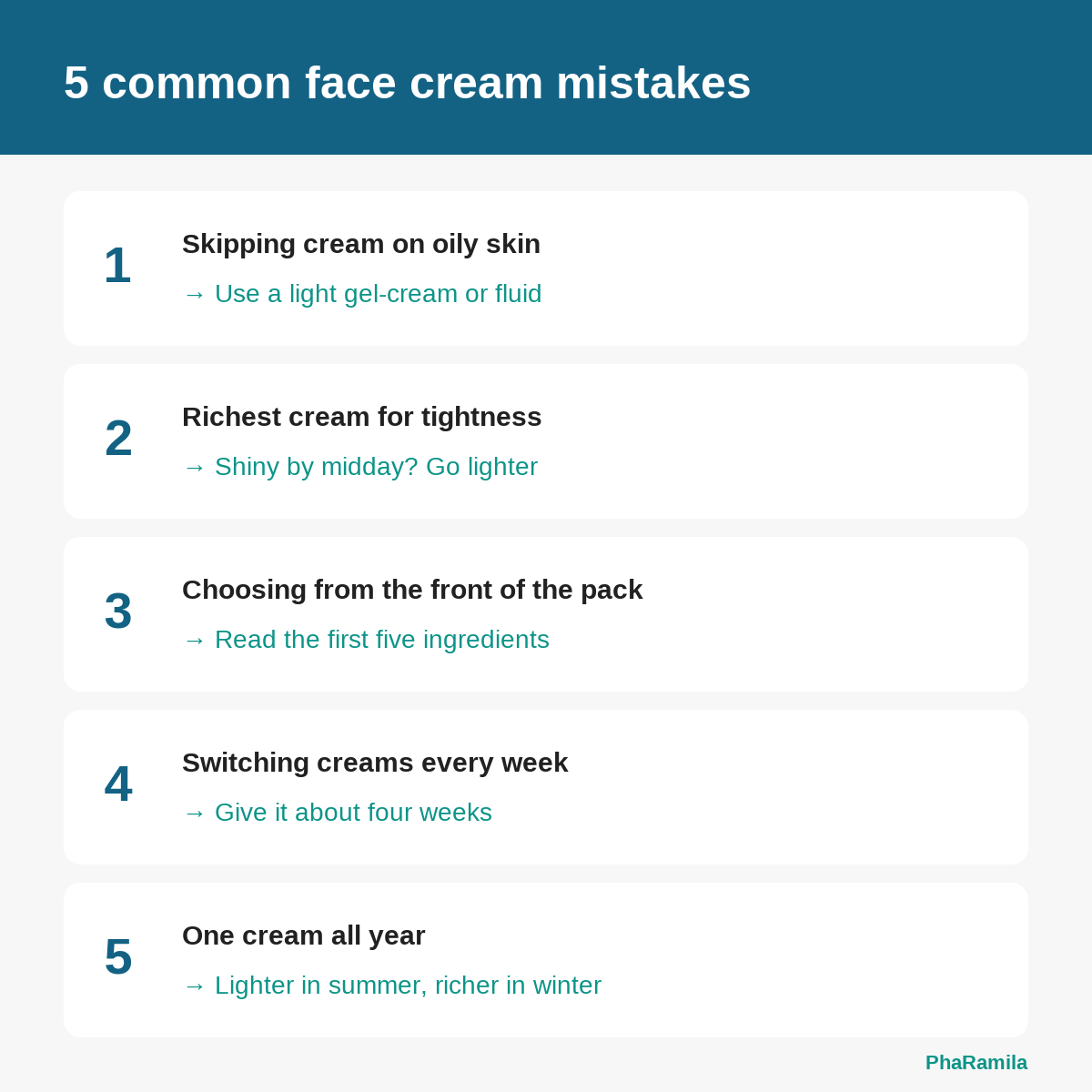
- Skipping cream because your skin is oily. Oily skin often feels tighter and looks shinier without one.
- Buying the richest cream for tightness. If you still get shiny by midday, the tightness is more likely dehydration, which wants a light texture.
- Choosing from the front of the pack. The first five ingredients tell you more than the claim in large letters.
- Switching creams every week. Your skin needs time to settle before you can judge a texture.
- Using the same cream all year. Skin that is comfortable with a gel in July may want a cream in January.
Face cream FAQ
Does oily skin need a face cream?
Yes. Oil and water are different things, and oily skin can still lack water. Skipping cream often leaves skin feeling tight after cleansing and shinier by midday. Choose a light gel-cream or fluid labelled oil-free or non-comedogenic, and apply a thin layer to the whole face.
How often should I apply face cream?
Twice a day suits most people: in the morning after cleansing and in the evening before bed. Apply it to slightly damp skin, within a few minutes of washing your face. If your skin feels tight in the afternoon, a second light layer is fine; if it feels greasy, use less or switch to a lighter texture.
Do I apply serum before or after face cream?
Serum goes first, face cream on top. The general rule is thinnest to thickest: a watery serum spreads and settles on bare skin, then the cream seals the layer in. In the morning, sunscreen goes on last, after the face cream has had a minute or two to settle.
Can I use body lotion on my face?
It is not a good everyday choice. Body lotions are made for thicker skin and often contain more fragrance and heavier oils than facial skin is comfortable with. For a night away from home it will not do lasting harm, but a cream matched to your facial skin type is the better routine.
Is an expensive face cream better?
Not automatically. Price reflects brand, packaging and formula complexity as much as performance. Two creams at very different prices can share the same first five ingredients. Compare the texture and the top of the ingredient list first, then decide whether the extras justify the difference for you.
Do men need a different face cream?
Not a different category. The same skin-type logic applies to everyone. If you shave, your skin may feel tighter afterwards, which often points to a fragrance-free formula or a slightly richer texture on the shaved areas. Choose by skin type first and by the label on the box last.
Choosing your face cream, in short
Choosing a face cream for your skin type comes down to three checks in the right order: find your skin type, match the texture, then read the first five ingredients. Test one new cream at a time and give it a few weeks. When you know your skin type, explore the full skincare range, with delivery across Italy.